The “Green River” will come up on the easternmost outskirts of Cairo. The government of Egypt plans to build a giant belt of lakes and parks deep in the desert. Once completed, it will cut through Egypt’s brand new, ultra-modern metropolis: the New Administrative Capital. A digital simulation shows the “river” extending throughout the length of the New Capital branching out into smaller lakes and pools. This video five years ago by Egypt’s prime minister depicted lush riverbanks dotted with trees and occupying vast landscapes of greenery. This was in spite of the fact that the site is in the middle of a desert and there is no natural sources of water nearby. Incidentally, this oasis will come up in the midst of a worsening climate crisis. The problems magnify with increase in temperature, population, and water scarcity. This is a critical concern for Egypt, host of this year’s COP27 climate summit. Under the circumstances, universal access to clean water is the country’s top priority. The authorities have repeatedly sounded alarms over the country’s water problems. Egypt faces an acute water crisis, but it’s building a ‘Green River’ in the desert. Egypt’s population now stands at 104 million and most of it is crowded along the narrow Nile River. Egyptian President Abdel Fattah al-Sisi recently said the country’s water resources could no longer meet the needs of the rapidly growing population. He noted that his government was taking strategic steps to conserve the water supply. He also mentioned about launching a new initiative called “Water Adaptation and Resilience” in collaboration with the World Meteorological Organization (WMO) at COP27.
Egypt needs an estimated 114 billion cubic meters of water per year. It means the country has to evolve methods to bridge the gap with groundwater, rainfall and treated wastewater. Saker El Nour is an Egyptian sociologist who researches agrarian issues, rural poverty and the environment in Arab countries. He admitted to a section of the media - “We are in a dry area, and so we don’t have enough rain and our main source of water is the Nile. This will get worse with climate change.” Obviously, Egypt has to think out of the box. Experts put the blame on the government’s own water management strategies. These are contributing to its pressing water crisis. On top of that, the Green River project is a luxurious project that envisages an artificial body of water that will mimic the Nile and become a key centerpiece of the New Capital project. It certainly has its plus points but the average farmer is still struggling to find enough water to sustain small plots of land, which for many represent their main source of income.
Some popular stories of this blogger –
Canine diplomacy between North and South Korea
Trekking in Sikkim near the Kanchenjunga Mountain"
UN Secretary-General Antonio Guterres cautions planet Earth is on "the highway to climate hell with our foot still on the accelerator"
Japan rearming itself to deter China in East Asia
Cruise ships are in the revival mode
By 2028, Singapore will welcome a near 1000 feet skyscraper known as 8 Shenton Way
The new Royal Caribbean cruise ship “Icon of the Seas” boasts of a jaw-dropping design
SpaceX launched the first Falcon Heavy mission in over three years
Mystery surrounds the fate of Elon Musk’s proposed Hyperloop transportation technology from Los Angeles to San Francisco
This blog is where you will get loads of tiny incidents that have left a lasting impression on me along with a dose of satire
Showing posts with label desert. Show all posts
Wednesday, November 9, 2022
Egypt is building the “Green River” - a giant belt of lakes and parks deep in the desert
Labels:
#farmers,
Abdel Fattah al-Sisi,
cairo,
COP27 Climate Talks,
desert,
egypt,
green river,
greenery,
poverty,
rainfall,
river nile,
water supply
Monday, October 17, 2022
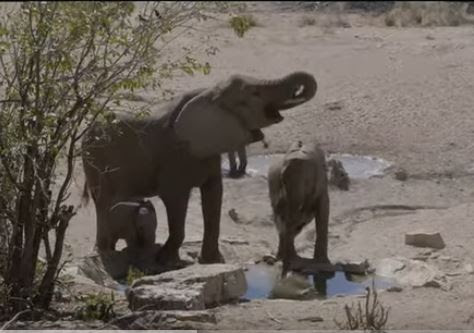
African elephants adapt themselves to an arid landscape of rocky mountains in northwest Namibia
African elephants usually wander among open grasslands or make their homes in forests. However, in northwest Namibia, they have fallen in love with an arid landscape of rocky mountains, sand, and gravel plains. These pachyderms have adapted to life in the desert. Incidentally, there are two populations of desert-adapted elephants in the world. In order to survive in this harsh environment, they have developed larger feet. These help them to move more easily across soft sandy terrain. These also serve as a useful tool, along with their trunks, to find water deep beneath the ground. Moreover, like other desert animals, they can survive for several days without water. In fact, they store water in a pharyngeal pouch in their throats. This helps them to collect and store. Dr Malan Lindeque is a Namibian zoologist and expert in elephant population ecology. He explained to a section of the media – “They have an excellent group memory – presumably held mostly by the adults – and knowledge of widely dispersed sources of water, which enable these elephants to move over very large areas, the largest home ranges recorded for elephants anywhere.” Desert elephants are finding friends in the drylands of Namibia.
He went on to add that while other elephants will seek food and water within a 12.4-mile radius, desert elephants can move 62 to 93 miles a day between waterpoints. This is “often in a quite straight line, demonstrating their knowledge of the location of these sites.” A conservation organization in Namibia says an estimated 62 desert dwelling elephants live in the dried up riverbeds of Namibia. This is only a fraction of the thousands that used to live in the Namib region in the 18th century. The decline is because of factors like hunting, poaching, increase in human populations and political conflict. Even now, their survival is uncertain because of a scarcity of food and water and regular conflict with another species – humans. From an estimated 3 to 5 million African elephants at the beginning of the 20th century, only 400,000 remain.
Some popular stories of this blogger –
Taiwan opens its doors to tourists after easing COVID-19 border curbs
Alaska cancels its snow crab harvest this year because of their disappearance from the Bering Sea in recent years
This year’s London Film Festival closed with ‘Glass Onion: A Knives Out Mystery’
SpaceX Crew-4 astronauts of NASA and ESA returned to Earth in a parachute-assisted splashdown
The mighty Mississippi River south of St. Louis is drying up because of drought
Greece depended entirely on renewable energy for five hours on a single day and used solar, wind and hydroelectric power
Prince Harry announced the return of Invictus Games to Canada in 2025 for the first-ever winter sports edition
Another incident of gun violence in North Carolina kills five, police arrests a 15-year-old boy
Unique flower market of Kolkata at Mullick Ghat on the banks of the Hooghly
He went on to add that while other elephants will seek food and water within a 12.4-mile radius, desert elephants can move 62 to 93 miles a day between waterpoints. This is “often in a quite straight line, demonstrating their knowledge of the location of these sites.” A conservation organization in Namibia says an estimated 62 desert dwelling elephants live in the dried up riverbeds of Namibia. This is only a fraction of the thousands that used to live in the Namib region in the 18th century. The decline is because of factors like hunting, poaching, increase in human populations and political conflict. Even now, their survival is uncertain because of a scarcity of food and water and regular conflict with another species – humans. From an estimated 3 to 5 million African elephants at the beginning of the 20th century, only 400,000 remain.
Some popular stories of this blogger –
Taiwan opens its doors to tourists after easing COVID-19 border curbs
Alaska cancels its snow crab harvest this year because of their disappearance from the Bering Sea in recent years
This year’s London Film Festival closed with ‘Glass Onion: A Knives Out Mystery’
SpaceX Crew-4 astronauts of NASA and ESA returned to Earth in a parachute-assisted splashdown
The mighty Mississippi River south of St. Louis is drying up because of drought
Greece depended entirely on renewable energy for five hours on a single day and used solar, wind and hydroelectric power
Prince Harry announced the return of Invictus Games to Canada in 2025 for the first-ever winter sports edition
Another incident of gun violence in North Carolina kills five, police arrests a 15-year-old boy
Unique flower market of Kolkata at Mullick Ghat on the banks of the Hooghly
Labels:
african elephants,
desert,
Dr Malan Lindeque,
ecology,
environment,
grasslands,
human conflict,
hunting,
memory,
namibia,
pachyderms,
poaching,
sandy terrain,
water,
zoologist
Subscribe to:
Posts (Atom)