Showing posts with label wildlife. Show all posts

Thursday, December 1, 2022

COP15, the December nature summit in Montreal, cautions about a human driven mass extinction looming ahead

Described as the lesser-known equivalent of the climate crisis, humans do have a “once-in-a-decade" chance to fix it. In other words, it is necessary to apply brakes to the destruction of life-sustaining ecosystems. It seems global wildlife populations have plummeted nearly 70 percent in just 50 years. The result is mindboggling – experts say an unprecedented one million species are now at risk of disappearing off the earth forever. International talks are coming up in Canada next week. Its aim would be to strike a global biodiversity treaty in order to apply brakes on the nature crisis. It could be similar to the historic Paris Agreement that tackled climate breakdown. Former French diplomat Laurence Tubiana, integral to the Paris deal, said protecting climate and life-sustaining nature are "inseparable challenges, but our global governance system has splintered them." A mass extinction looms – and we have a 'once-in-a-decade chance' to fix it. The December nature summit in Montreal proposes to reverse wildlife decline by 2030, as well as to protect 30 percent of land and sea. There would be a global biodiversity goal to "direct targets, laws, policies and funding at all levels and regions, much like the Paris Agreement has started doing for climate action.” That is what Ms Tubiana says.


Professor Alexandre Antonelli, director of science Kew Gardens explains – “The climate and nature crises are "intertwined." Biodiversity is absolutely critical to our lives and we losing it at an accelerating speed." Each country has its own interests and draws battle lines over things like pollution and cash. The previous global plan to stop species extinction and habitat destruction did not help and the world failed to achieve a single 2020 target. Professor Alexandre Antonelli cautions - "It is absolutely essential that we get it right this time." Otherwise, we may "reach a tipping point, after which it may be impossible or extremely hard to revert the loss of nature." The death of the Amazon rainforest is the best example. It regulates the world's climate and provides vital water to nearby industries and megacities. However, humans have chopped down nearly 18 percent of the forests. Once it reaches 25 percent, the rainforest will stop producing water and turn into a dry savannah. Instead of absorbing climate-heating carbon dioxide, the new ecosystem would begin to unleash it. Campaigner Ruth Davis cites a drought in Argentina in 2017-18, exacerbated by deforestation in the Amazon. It inflicted $4.6bn loss to the economy of one of the biggest agricultural producers in Latin America.


Some popular stories of this blogger –

Prince Harry and Meghan would not be present at the Royal Family's festive dinner

Northeast Frontier Railway (NFR) to modernize the New Jalpaiguri (NJP) railway junction

NASA says Artemis I Mission is proceeding as per plan

England on alert - the National Infrastructure Commission (NIC) warns flooding from heavy rainfall could double in the next three decades

The Sunderbans in the delta of the Ganges in West Bengal plans to introduce home stay in order to improve tourism

Mauna Loa volcano, the world’s largest active volcano, erupts for the first time in nearly four decades

UNESCO want to assign endangered status to the Great Barrier Reef, Australia does not agree

Police in Alberta, Canada, chase ostriches escaped from their enclosure, one of the birds killed when hit by a car

President Tsai Ing-wen of Taiwan quits as head of the governing Democratic Progressive Party after loss in election

Thursday, November 3, 2022

India imposed a ban on single use plastics but results are not showing even after three months

The ban on single use plastics imposed by India includes items like plates, cups, cutlery, straws, packaging films and cigarette packets. However, these are still in rampant circulation across the country and worsening pollution levels. Ravi Agarwal is the director of environmental NGO Toxics Link. He told a media outlet - "Though the central government has issued the ban, the implementation lies with the respective state governments and their state pollution control boards. The state's actions are not up to the mark; there seems to be lack of effective implementation strategy from the states to enforce the ban fully.” India uses about 14 million tons of plastic every year. The government has not issued any advisory on banning the use of SUPs. Neither are there any penalties. Therefore, SUP products continue to be available as usual. Why is India's single-use plastic ban failing? An official of the Central Pollution Control Board (CPCB) revealed that in spite of the ban, the use of SUP items, specifically thin carry-bags, continues unabated in the low-end section of the economy.


Prime Minister Narendra Modi made it clear that his government would be actively working towards a crackdown on plastic in its second term in power. However, plastic waste generated across the country daily is 26,000 tons. Out of this, more than 10,000 tons remain uncollected. One drawback is an organized plastic waste management system. In its absence, there is widespread littering and plastics end up in rivers, oceans and landfills. These pose threats to the lives of wildlife species. A senior official of CPCB says - "… we have directed strict enforcement of the ban, with a focus on street vendors, vegetable markets and local markets, along with checks at borders and inspection of concerned industries." It is necessary to improve waste segregation… and ramp up the infrastructure for recycling.


Some popular stories of this blogger –

Missiles fired by North Korea leads to evacuation warning in parts of Japan

Forests of the southern Sierra Nevada become victims of climate change

North Korea fires at least 10 missiles, one lands close to the territorial waters of the South for the first time since the 1945

Greta Thunberg will not join the COP27 summit in Egypt

China launched Mengtian module of its space station from the Wenchang Space Launch Centre in Hainan

Climatic crisis threatens emperor penguins of Antarctica

Britain selects a remote peat bog in Scotland to be the first rocket launch pad on the British mainland

Prime Minister Rishi Sunak could attend the COP27 climate summit

India eyes its own space station by 2035, ISRO wants industry to collaborate

Wednesday, November 2, 2022

Forests of the southern Sierra Nevada become victims of climate change

Wildfires, drought and bark beetle infestations between 2011 and 2020 have led to the loss of nearly a third of all conifer forests in the lower half of the mountain range. This is according to a recent study published in a journal related to ecology. It puts the loss to eighty-five percent of the southern Sierra’s high-density mature forests. These have either lost density or became non-forest vegetation. Obviously, climate change is taking a heavy toll of the landscape of California. It is not only staggering but also often irreversible. Losses of this nature could have grave consequences for wildlife in the region. These include protected species like spotted owls and Pacific fishers. They rely on mature tree canopies for their habitats. In the opinion of researchers, the findings are another indication of the shifting climate regime. Moreover, these offer new insights that could help guide forest management and conservation strategies. Nearly a third of southern Sierra forests killed by drought and wildfire in last decade. The Sierra covers about a quarter of California’s land area. Hundreds of plants and animals call the region home, and the forest helps sequester carbon and store water for the state’s residents.


The problem is multifaceted. Human-caused climate change is contributing to warmer, drier conditions. These are converting once-green forests into brittle tinder and lengthening the window of time in which wildfires can burn each year. Wildfires once regularly simmered along the forest floors, today’s “megafires” are burning at high severity and searing some trees up to the top. Incidentally, the loss of forestland may be jarring to humans, but it is devastating for some creatures that call the Sierra home. California spotted owls, which typically occupy nest sites with huge canopy cover are left with fewer options in younger, sparser forests. Climate change is a “threat multiplier” and it might lead to irreversible disturbances in due course of time.


Some popular stories of this blogger –

North Korea fires at least 10 missiles, one lands close to the territorial waters of the South for the first time since the 1945

Greta Thunberg will not join the COP27 summit in Egypt

China launched Mengtian module of its space station from the Wenchang Space Launch Centre in Hainan

Climatic crisis threatens emperor penguins of Antarctica

Britain selects a remote peat bog in Scotland to be the first rocket launch pad on the British mainland

Prime Minister Rishi Sunak could attend the COP27 climate summit

India eyes its own space station by 2035, ISRO wants industry to collaborate

Collapse of the 19th century pedestrian suspension bridge over the Machchu River in Gujarat kills 141, toll could rise

The West Bengal government to launch electric buses in Calcutta to bring down air pollution

Saturday, September 10, 2022

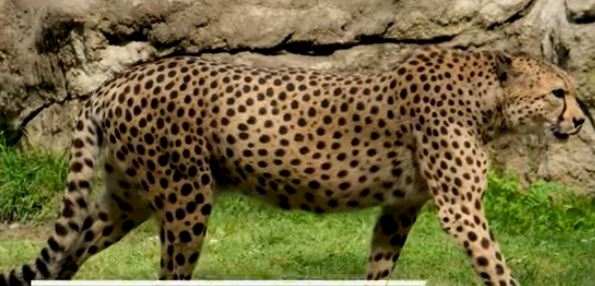
Cheetahs went extinct in India in 1953 and the first batch of 12 new animals will arrive from South Africa soon

South Africa has experience in relocating cheetahs to other countries. They will now transfer 12 of these animals to India where it has become extinct in 1953. These cheetahs will arrive in batches and the first batch is expected to reach India from South Africa next month. This will be the first part of an ambitious project to reintroduce them into India. Their distinctive spots identify these animals. A team of wildlife experts from South Africa has gone back to their country from India after inspecting the holding facility where the animals would be released. Officials explained that nine of the animals are quarantined in Limpopo province, while the other three were quarantined at Natal province. Cheetah experts from South Africa would travel with the animals when they reach India. First batch of 12 cheetahs likely to reach India from South Africa in October. Incidentally, the translocation of cheetahs from South Africa will come after that of eight of the animals from Namibia next week.


During flight, the animals will be fully awake in their transport crates. However, they would be tranquilized to keep them calm. The process is simple. A dart gun is used in which there is a combination of chemicals. Once the effect of anesthesia takes over, they are put into suitable crates while others do the work that needs to be done and scan their microchips. Officials of the government will check the microchip numbers for accuracy. This is necessary because there is disease testing and vaccination protocols required by India. Therefore, the microchip numbers have to match. After satisfactory checks, the cheetahs would be released from their crates into a holding facility. Then will come monitoring of their health by the Indian team. That would ensure that they are hunting again and fit for release into the reserve - their final destination.


Some popular stories of this blogger –

Tropical storm Kay strikes parts of Southern California with winds of over 100 mph

North Korea declares itself as a nuclear weapons state

The Royal family and the world paid tributes to Queen Elizabeth II who passed away peacefully at the age of 96

Virat Kohli scores a century against Afghanistan in Asia Cup 2022, India registers a convincing win

Bengalis of Kolkata love mouthwatering dishes and Khaibaar Pass helps them choose the best

Kolkata loves variety in foods and the Kokattans have their favorite food joints

Prince William and Kate head to school with their kids George, Charlotte and Louis

Kolkata gears up for Durga Puja rush with special buses for shoppers

China grows rice and vegetables on the Tiangong space station

Thursday, March 10, 2022

Australia faced wildfires in 2020, now in 2022 it is facing floods

Prime Minister Scott Morrison of Australia declared a national emergency because of the death of 22 people along the east coast due to floods. He described it as - "This is a major catastrophe... of national proportions." Many persons had to be rescued from flooded regions. The emergency would ensure ready availability of emergency powers. The country faced wildfires in 2020 that destroyed the vegetation and wildlife. Heavy rains led to the emergency in the states of New South Wales and Queensland. It seems members of the community stepped up rescue efforts and helped to keep the death toll to a minimum. The authorities carried out mass evacuation from areas that endured the highest floods ever recorded.


Personnel of the military extended assistance in the flood recovery in northern New South Wales. The number of homes and businesses flooded in southeast Queensland was more than 20000. Sydney is the capital of New South Wales. It is the biggest city of Australia and it had to endure the wettest start to a year ever recorded.


Sky News dated 9 March 2022